This challenge was a two-part OSINT-style identification task based on a roadside electrical component. The goal was first to determine the correct ST number according to the NIA classification, and then, after identifying the object more precisely, to recover its manufacturer/model number.
Challenge Overview
The provided prompt described a strange object found on the side of the road and asked for an ST number according to the NIA (National Insulator Association).
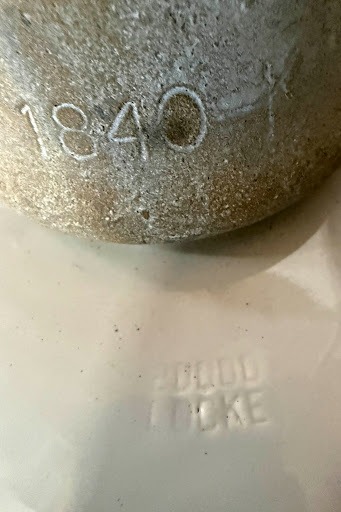
The visible text on the object included:
GEUSA184020000LOCKE
At first glance, the object appeared to be some sort of electrical hardware. The markings strongly suggested that it was not a random piece of scrap, but rather a standardized utility component produced by a known manufacturer.
Stage 1: Identifying the Object
The first step was to determine what kind of item was shown in the images.
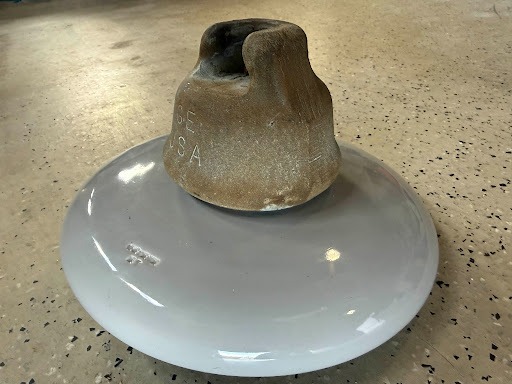
The visible markings, especially LOCKE and GE USA, pointed toward a high-voltage porcelain insulator, specifically a suspension-type insulator used in electrical transmission systems.
This identification was important because the NIA classification system is used to catalog insulators by shape and design type. Once the object was recognized as a suspension insulator, the search space became much smaller.
Stage 2: Finding the ST Number
After identifying the object type, the next task was to match the physical insulator against the NIA/collector classification references. The relevant approach was:
- Identify the insulator as a suspension insulator.
- Note the manufacturer markings: Locke and GE USA.
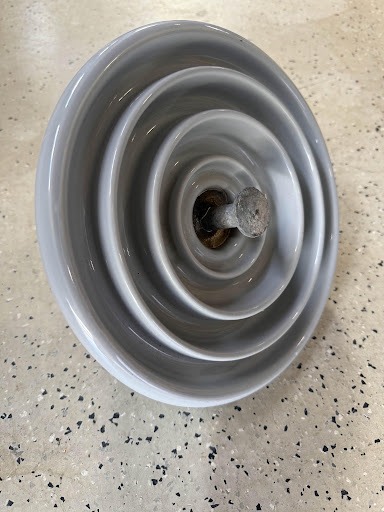
- Compare the shape, concentric ridges, and profile of the insulator to known cataloged examples.
- Match the design to the corresponding ST classification.
Using this process, the design was matched to classification ST-4626F.
Stage 3: Recovering the Model Number
The second part of the challenge asked for the model number of the insulator. Once the ST classification was known, the manufacturer information could be used to determine the catalog-style naming convention.
The markings on the insulator provided the key clues:
- 20000 — indicating the 20,000 lb class
- LOCKE — the manufacturer
- 1840 — the design or catalog identifier
From the challenge context, the model number was derived by interpreting these markings in the appropriate Locke catalog format:
20 (load strength class)S (type)840 (specific design identifier)Combined together, this gave the model number 20S840.
Conclusion
This challenge was a good example of a multi-step OSINT puzzle. The solution required recognizing a real-world electrical object from limited visual evidence, using manufacturer markings to identify the correct class, and then mapping that class to the corresponding catalog notation.
The key takeaway was that the challenge was not just about reading text off the object, but about understanding how that text fit into a broader industrial classification system. Once the insulator was identified, the rest of the solve path became much clearer.